
Humidity Chamber vs Stability Chamber: Which One Do You Need?
To understand the difference between a humidity chamber and a stability chamber, it is important to first explore their working principles, key features, and intended applications. Although both chambers provide controlled environmental conditions, they differ in their primary purpose, testing requirements, and areas of application.
Let’s take a closer look at how these chambers work and understand which one is best suited to your product testing requirements.
What is a humidity chamber?
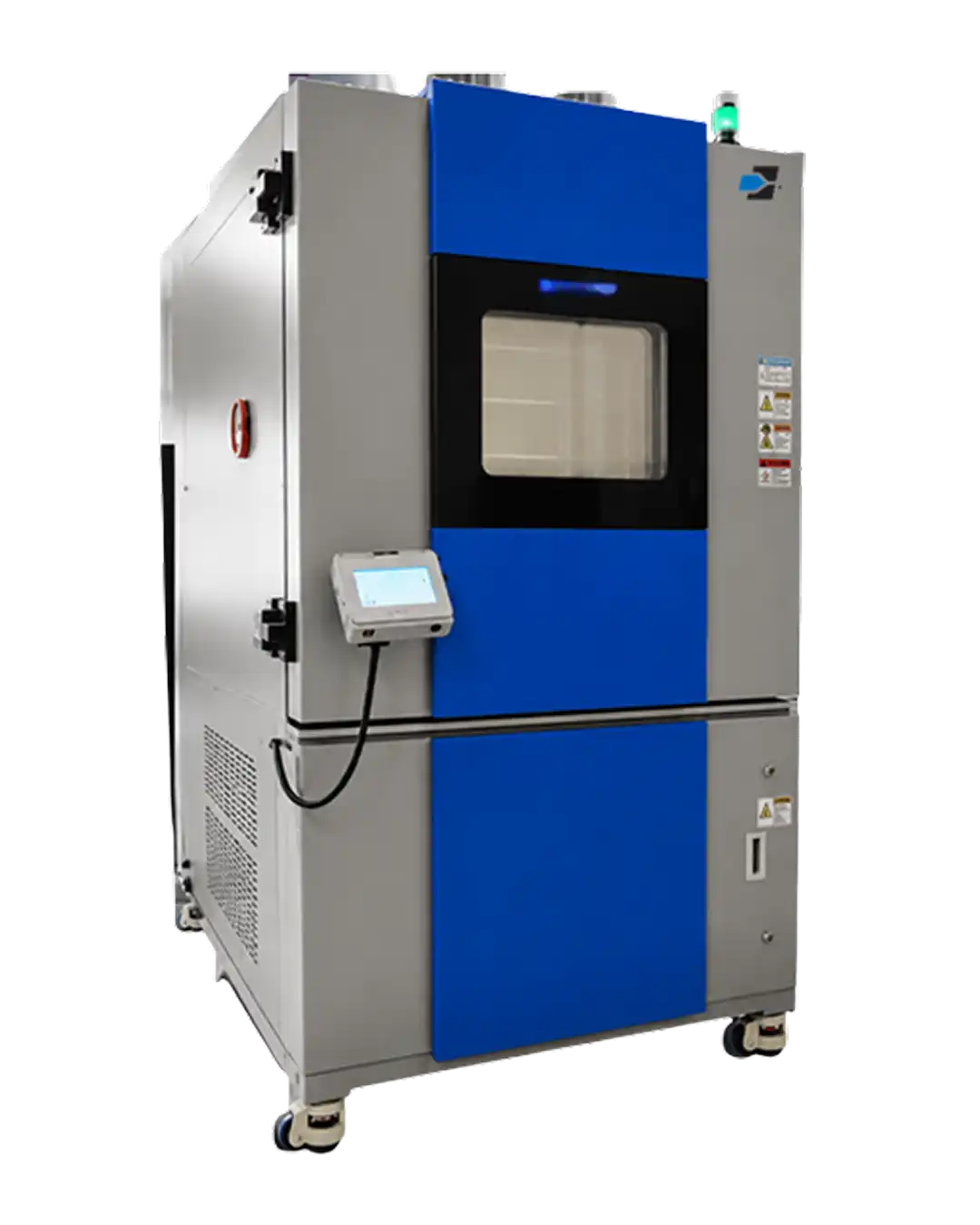
A humidity chamber is a test enclosure that holds a product at a chosen temperature and relative humidity (RH) for a set period, often cycling between conditions to simulate damp heat, condensation or tropical climates. ISOTECH’s humidity chamber is built for temperature and moisture-controlled testing of products and components.
A refrigeration system and heaters set the temperature, while a steam generator or humidifier adds moisture and a cooling coil removes it. A programmable controller runs the profile, such as a ramp to 85°C at 85% RH held for 168 hours.
Typical uses of a humidity chamber include:
- Damp heat and cyclic humidity tests under standards such as IEC 60068-2-78 and IEC 60068-2-30
- Insulation resistance and corrosion checks on electronics, PCBs, sensors and connectors
- Moisture absorption studies on plastics, packaging and textiles
- Humidity conditioning of automotive and aerospace parts before further tests
The defining trait of a humidity chamber is range. Depending on the model, it can run from sub-zero to above 100°C and across a wide RH band, with fast ramp rates. The aim is stress: you push the product until you learn where it fails.
For wider test needs, see ISOTECH’s environmental chamber and hot and cold chamber ranges. Exact ranges depend on the model, so confirm specifications with the engineering team.
What is a stability chamber?
A stability chamber holds a narrow, precisely controlled temperature and humidity for months or years, so you can prove how a product’s quality changes over time. ISOTECH’s stability chamber serves this kind of long-duration study, where steady conditions matter more than speed.
Pharmaceutical stability testing follows ICH Q1A(R2). The storage conditions most labs set on a stability chamber are:
- Long-term: 25°C ± 2°C / 60% RH ± 5%, or 30°C ± 2°C / 65% RH ± 5%, or 30°C ± 2°C / 75% RH ± 5%
- Intermediate: 30°C ± 2°C / 65% RH ± 5%
- Accelerated: 40°C ± 2°C / 75% RH ± 5%
Many Indian manufacturers include 30°C / 75% RH because of the country’s hot, humid climate, though the right condition depends on your target markets and regulators.
Because studies run for years, a stability chamber is judged on uniformity, tight tolerance, alarms and continuous data logging rather than on extreme ranges. Photostability chambers add controlled light for ICH Q1B studies.
A stability chamber is used for:
- Drug products and active pharmaceutical ingredients
- Vaccines, biologicals and diagnostic reagents
- Food, cosmetics and nutraceutical shelf-life studies
- Medical devices and packaging validation
For volume storage, a walk-in environmental chamber can hold large batches. See ISOTECH’s pharmaceutical applications for more detail.
Humidity chamber vs stability chamber: key differences
The core difference in the humidity chamber vs stability chamber question is purpose: one stresses a product to find its limits, the other stores it under fixed conditions to track change.
| Factor | Humidity chamber | Stability chamber |
| Main purpose | Stress and reliability testing | Shelf-life and storage studies |
| Typical run time | Hours to weeks | Months to years |
| Temperature range | Wide, often sub-zero to above 100°C |
Narrow, usually near ambient to about 60°C |
| Humidity use | Wide RH range, often cycled | Fixed set points such as 60%, 65%, 75% RH |
| Control focus | Fast ramps and cycling | Tight tolerance and uniformity |
| Common standards | IEC 60068, MIL-STD-810 | ICH Q1A(R2), ICH Q1B |
| Records needed | Test reports | Data logging, alarms, audit trail, IQ/OQ/PQ |
| Common users | Electronics,automotive, aerospace, defence | Pharma, biotech, food, cosmetics |
Many buyers ask whether one machine can do both jobs. A chamber built for wide-range testing can often hold stability set points, but without qualification, mapping and audit-ready records it will not satisfy a regulated pharma audit. In the same way, a stability chamber rarely offers the ramp rates and extreme ranges a reliability lab needs.
Exact ranges and tolerances vary by model, so treat the table as a guide and confirm figures against the datasheet.
Why the choice matters
Choosing between a humidity chamber and a stability chamber comes down to one question: are you testing how a product survives stress, or how well it holds its quality over time? Both machines control temperature and relative humidity, so buyers often treat them as the same equipment. They are not, and the humidity chamber vs stability chamber decision affects your test results, your audit outcome and your budget.
A wrong purchase shows up late. A lab that buys a stability chamber for harsh-condition electronics testing finds the temperature range too narrow. A pharma team that buys a general humidity chamber for shelf-life studies may struggle to show the uniformity, mapping and records an auditor expects.
This guide explains what each chamber does, how they differ, which industries use which, and what to check before you buy. It is written for engineers, QA managers and procurement teams in Bangalore and across India who want a clear answer before requesting a quote.
Which one do you need?
Match the chamber to your test goal, not to the product name. Use these checks.
Choose a humidity chamber if you:
- Test electronics, PCBs, sensors or connectors for damp heat and condensation
- Need fast temperature ramps, cycling or sub-zero conditions
- Follow IEC, MIL-STD or customer-specific test specifications
- Validate EV battery packs and components (see battery testing equipment)
Choose a stability chamber if you:
- Run ICH stability studies for pharmaceuticals or biologicals
- Store samples at fixed conditions for months or years
- Face regulatory inspections that need qualification and audit-ready records
- Study shelf life of food, cosmetics or medical devices
Consider a different chamber if you:
- Need rapid hot-to-cold transitions, which points to a thermal shock chamber
- Grow or test plants and seeds, which points to a plant growth chamber
- Test large assemblies or full batches, which points to a walk-in system
Some Bangalore labs need both. A contract testing lab, for example, may serve aerospace and electronics clients with a humidity chamber and pharma clients with a stability chamber. Buying two purpose-built machines usually costs less than forcing one to do both jobs and failing an audit.
Still unsure? Read ISOTECH’s guide to choosing the right environmental test chamber.
What to check before you buy
Whichever chamber you pick, compare these points across suppliers before you place an order.
- Temperature and humidity range: confirm the full operating envelope, and whether the stated RH range holds at every temperature, since the usable humidity area narrows at the extremes.
- Accuracy and uniformity: ask for the stated tolerance at your set points and for a uniformity report. For a stability chamber, ICH conditions allow ±2°C and ±5% RH, so the chamber should hold well inside that.
- Volume and loading: match the working volume to your sample load, and leave space for airflow.
- Controller and data logging: look for programmable profiles, alarms, data export and, for regulated work, an audit trail.
- Safety features: over-temperature protection, water-level and door alarms, and power-failure recovery protect your samples.
- Qualification and calibration: ask for calibration certificates and IQ/OQ/PQ support if you work in a regulated industry.
- Customisation: shelves, ports, size and control options should fit your application, not the other way round.
- After-sales support: installation, calibration, preventive maintenance and repair determine how long the chamber stays reliable.
ISOTECH builds configurations around the application and supports the chamber through its life. Read more about services and support, or learn about the company.
Choosing a chamber manufacturer in Bangalore
Buying locally in Bangalore gives you faster service, easier site visits and shorter spare-part lead times. The city is home to aerospace and defence units, electronics and EV developers, research institutes and a growing pharma and biotech base, so there is steady demand for both humidity and stability testing.
When you shortlist a stability chamber manufacturer in Bangalore or a humidity chamber supplier, ask these questions:
- Is the quality system certified, such as ISO 9001:2015?
- Can the team visit your site to review your test profile before quoting?
- How quickly can service engineers respond, and are spare parts held locally?
- Are calibration and validation support available after installation?
- Can they share references from industries similar to yours?
ISOTECH Technology Pvt. Ltd. is an ISO 9001:2015 certified manufacturer based at Peenya Industrial Estate, Bengaluru. It designs and builds environmental test chambers for aerospace, automotive, defence, electronics, pharmaceutical and renewable energy teams, and its clients include ISRO, DRDO, Samsung and IIT Patna. Browse the full list of applications or the complete product range to see how each system fits.
Frequently asked questions
What is the difference between a humidity chamber and a stability chamber?
A humidity chamber stresses products across wide temperature and humidity ranges to find failure points. A stability chamber holds narrow, fixed conditions for months or years to show how quality changes over time. The first suits reliability testing, the second suits shelf-life studies.
Can I use a humidity chamber as a stability chamber?
Technically it can hold similar set points, but regulated pharma work also needs tight uniformity, qualification, alarms and audit-ready data. If your studies face a regulatory inspection, buy a purpose-built stability chamber.
What conditions does a stability chamber maintain?
Common ICH conditions are 25°C / 60% RH and 30°C / 65% RH for long-term studies, 30°C / 75% RH for long-term in hot, humid regions, and 40°C / 75% RH for accelerated studies. Tolerances are typically ±2°C and ±5% RH.
Which chamber is best for electronics testing?
A humidity chamber is usually the right choice, since it gives the wide range and fast ramps needed for damp heat, cyclic humidity and condensation tests. For rapid hot-cold transitions, add a thermal shock chamber.
How long does a stability study last?
Under ICH Q1A(R2), a submission generally needs at least 12 months of long-term data and 6 months of accelerated data, and studies often continue for the proposed shelf life. Confirm the requirement with your regulator.
Can the chamber be customized to my requirement?
Yes. ISOTECH shapes configurations around the application, including size, range and control options. Share your specimen, target conditions and volume with the team to get a recommendation.
Does ISOTECH provide support in Bangalore?
ISOTECH is based in Bengaluru and supports its equipment through installation, calibration, preventive maintenance and repair. See services and support for details.
Get the right chamber for your test
The humidity chamber vs stability chamber choice is simple once your goal is clear: pick a humidity chamber to stress a product and find its limits, and a stability chamber to prove how it holds up over time. Check the range, tolerance, records and support before you buy, and match each to your standards, whether IEC, MIL-STD or ICH.
Share your specimen, target conditions and chamber volume with the ISOTECH engineering team and get a configuration recommendation.
- Request a quote
- Call +91 96064 55074 or email sales@isotechpl.com
- Visit ISOTECH to explore the full range of environmental test chambers