
Battery Testing Equipment.
Controlled temperature, humidity and cycling environments for evaluating battery performance, life, charging behaviour and safety.
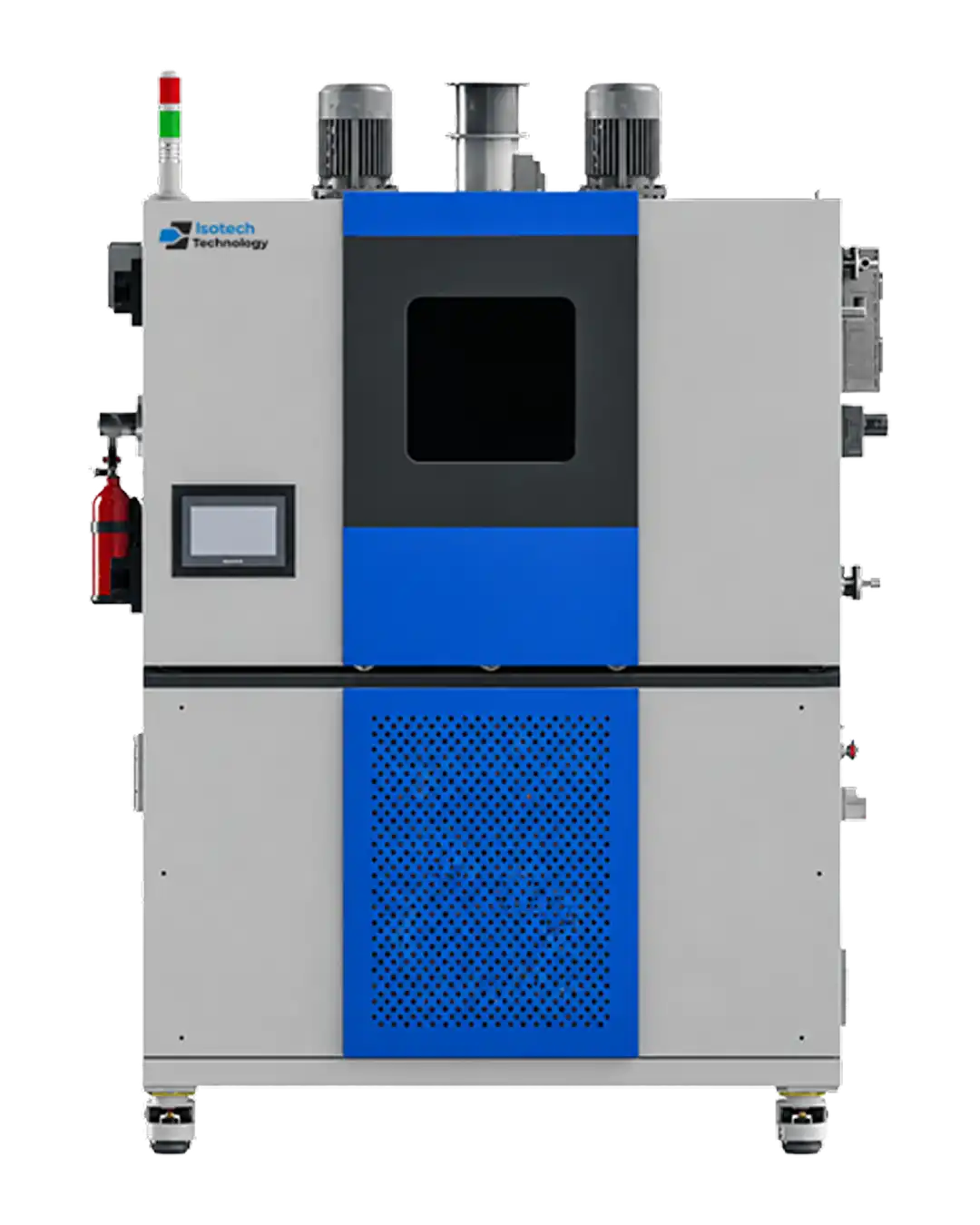
Condition batteries at the edge of real-world operation.
ISOTECH Battery Testing Chambers are developed for lithium-ion and other battery chemistries exposed to temperature, humidity and thermal-stress conditions.
Published test purposes include battery performance, lifecycle, charging behaviour and safety evaluation for EV batteries, portable electronics, energy-storage systems and aerospace applications.
The current page references IEC, IS, ASTM, MIL-STD and JSS requirements. Confirm the exact method, cell or pack configuration, instrumentation and selected safety package during technical review.
Test performance, life and safety under stress.
The chamber supplies the controlled environment around battery cells, modules or packs while the test programme evaluates behaviour.
Temperature exposure
Evaluate performance and reliability under defined low- and high-temperature conditions.
-70°C to +180°C main featureHumidity conditioning
Apply controlled moisture to investigate environmental effects on battery assemblies and supporting materials.
10% to 98% RHLifecycle cycling
Coordinate programmed chamber profiles with repeated charge and discharge cycles to observe degradation.
Ramp / soak / repeatSafety-focused testing
Configuration-led protection supports hazardous scenarios and monitored response to abnormal conditions.
Safety package by requirement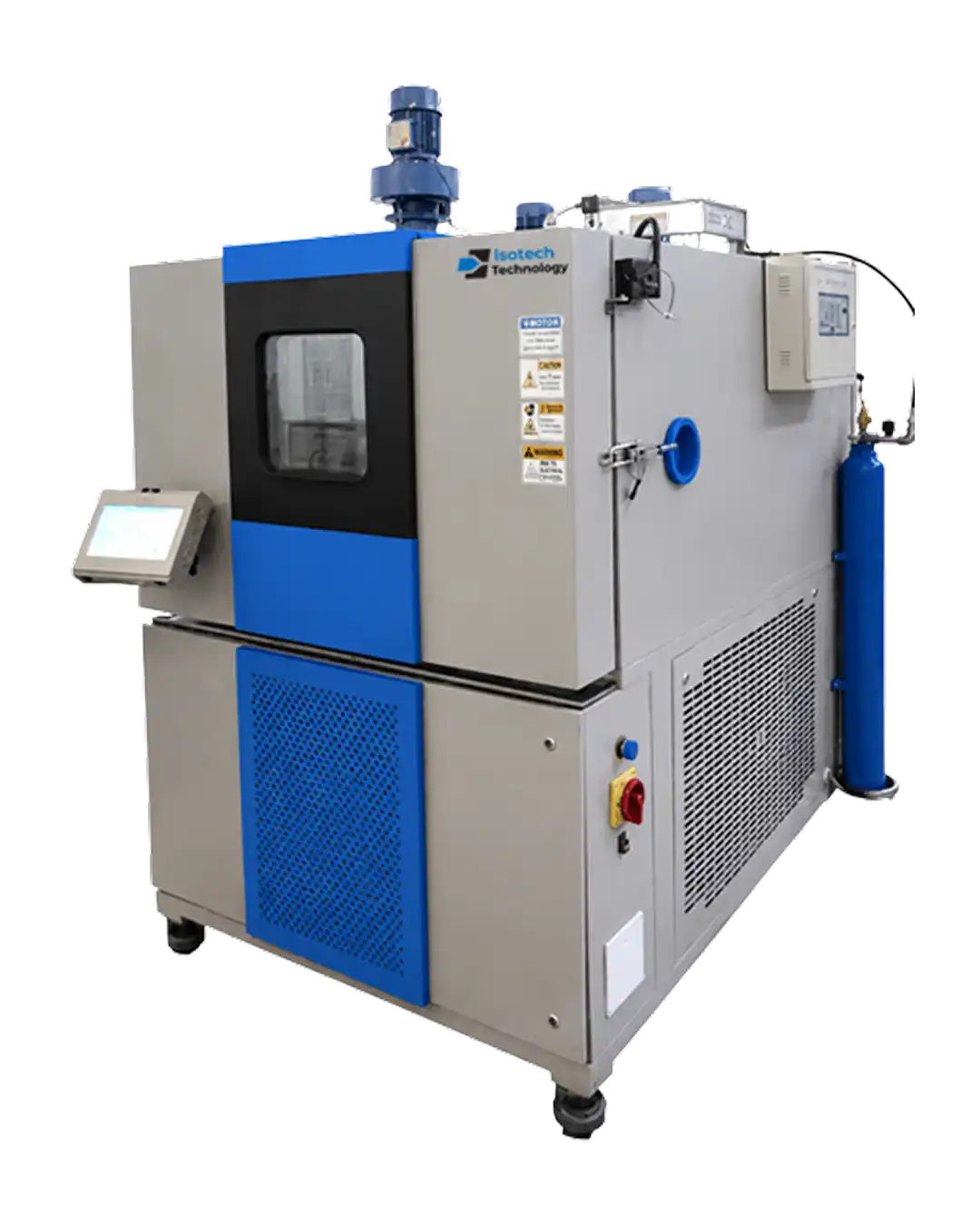
Cells combine to deliver the required power and energy.
An automotive battery system uses cells connected in series or parallel. Each cell contains two electrodes that store charge carriers within a defined voltage window.
Charge
An external charging source applies voltage and moves charge carriers toward one electrode.
Supply power
When connected to a device, electrons flow through the external circuit to operate the electrical load.
Discharge limit
The observable voltage drops as the charge carrier depletes from the anode until the permissible lower voltage is reached.
Repeat the window
Electrode materials define the operational voltage range within which the cell can repeatedly charge and discharge.
Containment and shutdown engineered around the test risk.
The current product page references advanced battery-safety features in addition to conventional chamber protection. The installed package should be selected against the chemistry, specimen size, energy level and test method.
Explosion relief
Explosion-relief ports are referenced for hazardous test scenarios.
Gas sensing
Gas-detection sensors are referenced for monitoring hazardous emissions.
Fire suppression
Fire-suppression systems are listed among the advanced available protections.
Over-temperature protection
Adjustable high- and low-temperature cut-outs protect the chamber and specimen.
Emergency stop
An emergency-stop switch supports fast operator response to unsafe conditions.
Door interlock
The chamber stops when the door opens; a door limit switch monitors access.
Independent protection
Each electrical functional circuit has a safety facility that can isolate the affected circuit or chamber.
Ventilation controls
Ventilation control is referenced as part of the battery-testing safety environment.
Refrigeration and airflow for repeatable profiles.
The published conditioning system combines mechanical refrigeration, pressure protection and uniform chamber circulation.
Mechanical refrigeration
An air-cooled, single-stage, non-CFC mechanical compression system provides chamber cooling.
- Ozone-friendly refrigerant approach
- Hermetically sealed compressor
- R134a or R404A listed
- Plate-fin cooler
Heat rejection and expansion
An air-cooled condenser and electronic automatic expansion valve regulate the refrigeration process.
- Electronic auto-expansion mechanism
- Air-cooled condenser
- Designed for high/low pressure protection
- Temperature-related safety protection
Pressure monitoring
Pressure-measuring devices monitor suction and head or discharge pressure in the refrigeration system.
- Suction-pressure measurement
- Head/discharge-pressure measurement
- HP/LP cut-off
- Oil separator with oil-return system
Profile capability
Published models combine heating and cooling rates of 3°C to 5°C with humidity conditioning.
- Model-dependent -70°C or -40°C lower limits
- Upper limit listed as +180°C / +200°C
- Humidity range 10% to 98% RH
- Programme-led cyclic operation
Programme, monitor and record the battery environment.
The large-screen programmable controller combines TFT LCD touch and key input with programme-pattern graphics, history trends and cyclic ramp-and-soak segments.
Profiles and cycles
Multiple programmes and profile segments support ramp, soak and cyclic conditioning.
Connected operation
RS-232/485 ports, networking and USB support hardware connection and fast downloads.
LO and RE models
LO identifies logic-programmable models; the current page also references microprocessor PID non-programmable control for RE configurations.
PT100 sensing
PT100 sensors measure temperature for the chamber control and monitoring system.
Two published low-temperature configurations.
The model table lists large-format chamber capacities, humidity conditioning and a common heating/cooling-rate band.
| Model | Size / volume | Temperature and humidity | Heating / cooling rate |
|---|---|---|---|
| ITBTEC-70 LO | 750 L to 27000 L | -70°C to +180°C / +200°C; 10% to 98% RH | 3°C to 5°C |
| ITBTEC-40 LO | 750 L to 27000 L | -40°C to +180°C / +200°C; 10% to 98% RH | 3°C to 5°C |
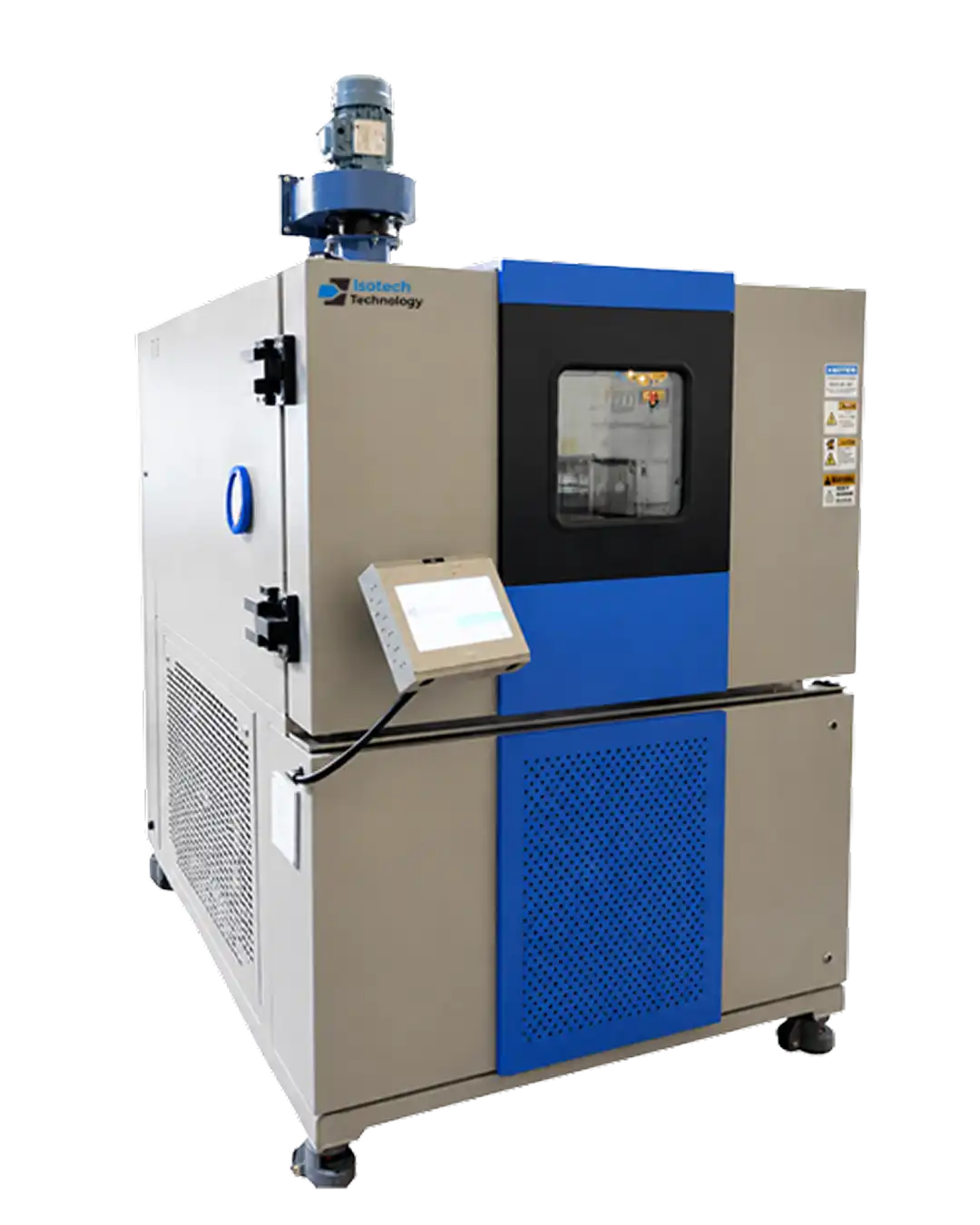
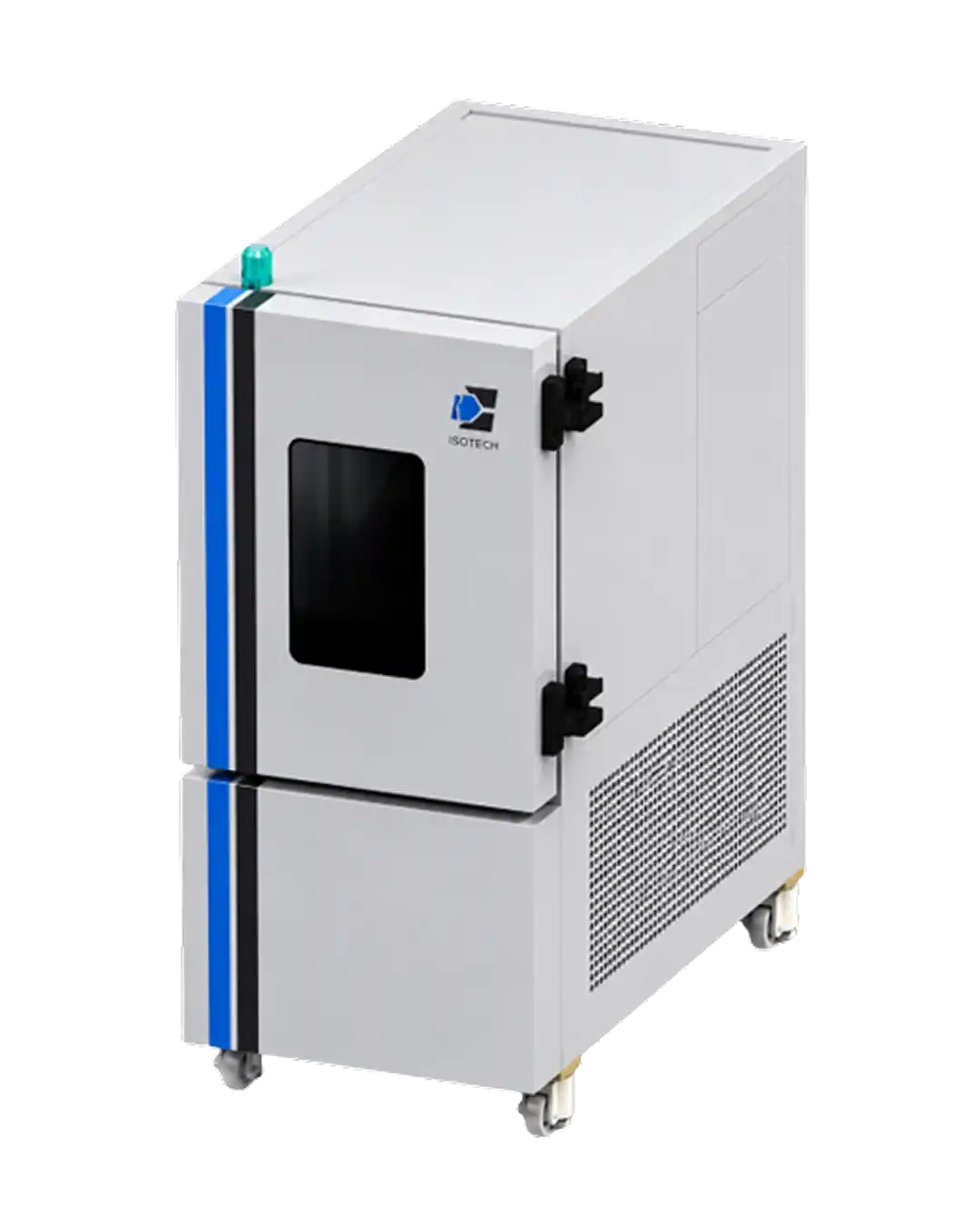
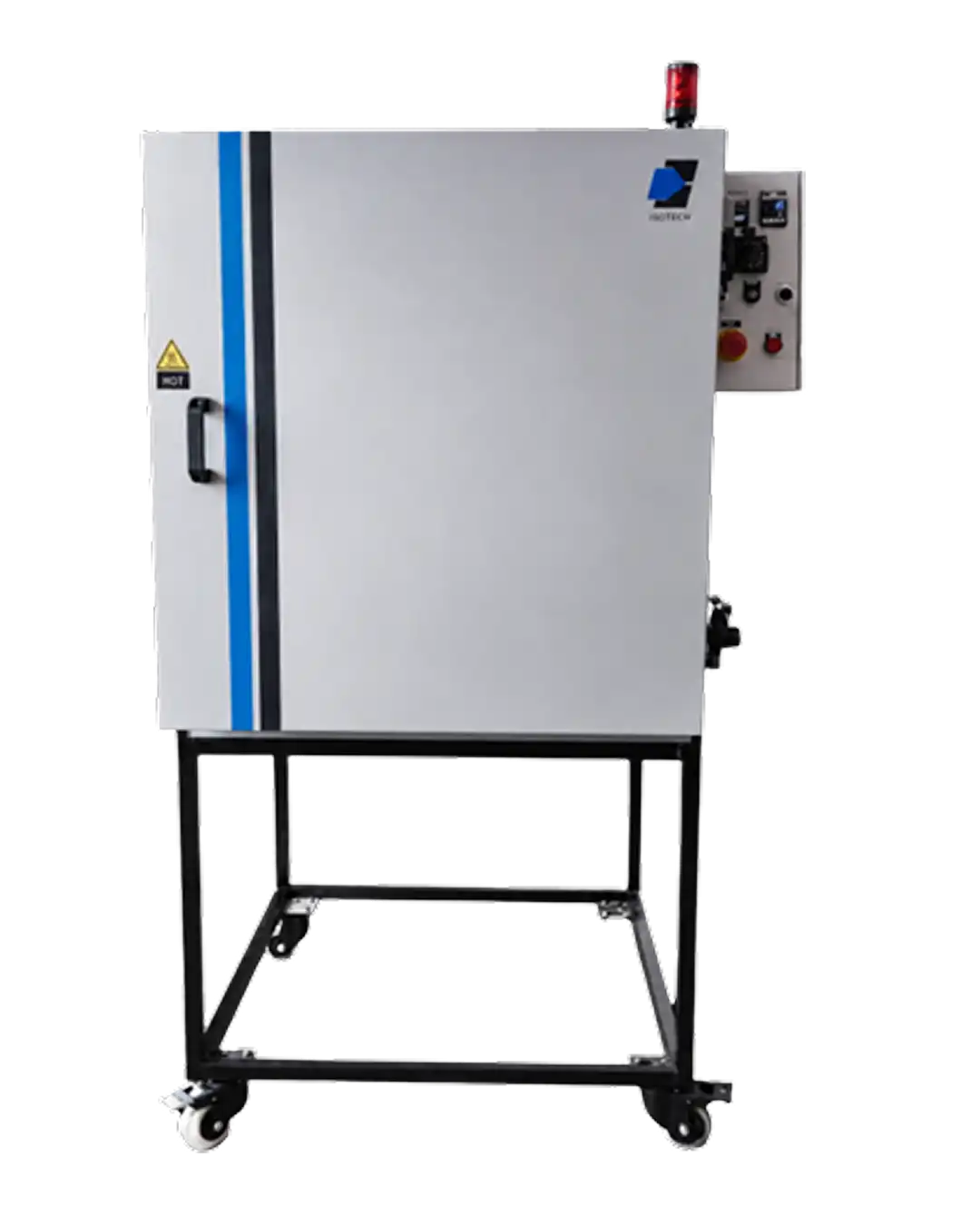
Battery testing chamber samples.
Published ISOTECH equipment views showing completed battery-conditioning systems.
Field feedback from ISOTECH clients.
Published customer reviewsI have been using Isotech environmental chambers for more than 3-4 years and placed orders multiple times. Robust technology, a user-friendly product and good technical support.
Radha KrishnaISOTECH clientThe Salt Spray Chamber product was of high quality, and the customer service was excellent. Overall, I am very happy with the product.
Sanjeev ShettyISOTECH clientNice working environment. Best environmental testing chamber manufacturers from Bangalore.
LokanathISOTECH clientIsotech Technology supplied reliability, durability and quality products to test different environmental conditions.
Malcom RoyISOTECH clientOther environmental test systems.
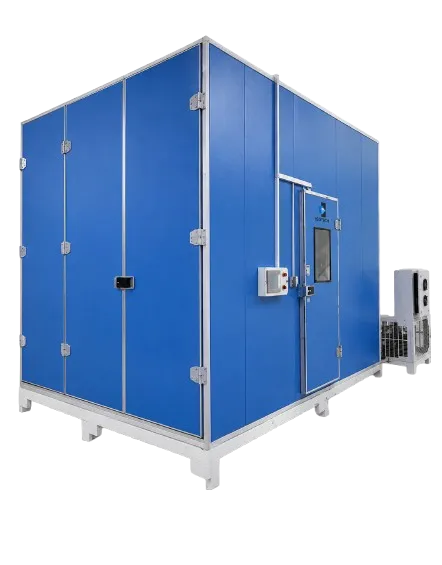
Specify the cell, module or pack.
Share the battery chemistry, energy level, specimen dimensions, temperature-RH profile, charge-discharge arrangement and required safety package with the ISOTECH engineering team.
Battery testing equipment guidance.
Answers covering equipment scope, importance, applications, customization, safety, support and training.
ISOTECH develops battery-testing and environmental-conditioning equipment for evaluating battery performance, reliability and safety.
ISOTECH publishes battery-testing chambers, environmental chambers, thermal-management solutions and related application-specific systems.
Testing helps establish battery safety, performance and reliability under simulated operating and environmental conditions.
Published sectors include automotive, aerospace, energy storage, consumer electronics and renewable energy.
Yes. Workspace, temperature-humidity range, controller, cable access, specimen arrangement and safety systems can be reviewed for the application.
Yes. ISOTECH publishes installation services, calibration support, maintenance and after-sales care.
Published protections include thermal and overcurrent protection, emergency shutdown, door interlocks and ventilation controls. The product introduction also references explosion relief, gas detection and fire suppression; confirm the selected package.
ISOTECH publishes energy-efficient design and eco-friendly options intended to reduce the environmental impact of battery-testing equipment.
Yes. ISOTECH publishes training support to help users operate and maintain battery-test equipment effectively and safely.
Use the ISOTECH contact page or call +91 96064 55074. Share the specimen, chemistry, test profile, safety requirement, workspace and installation location.