
Walk-In Cooler
/ Cold Chamber.
Walk-in cold rooms for controlled low-temperature storage and environmental testing of large products, assemblies and temperature-sensitive materials.
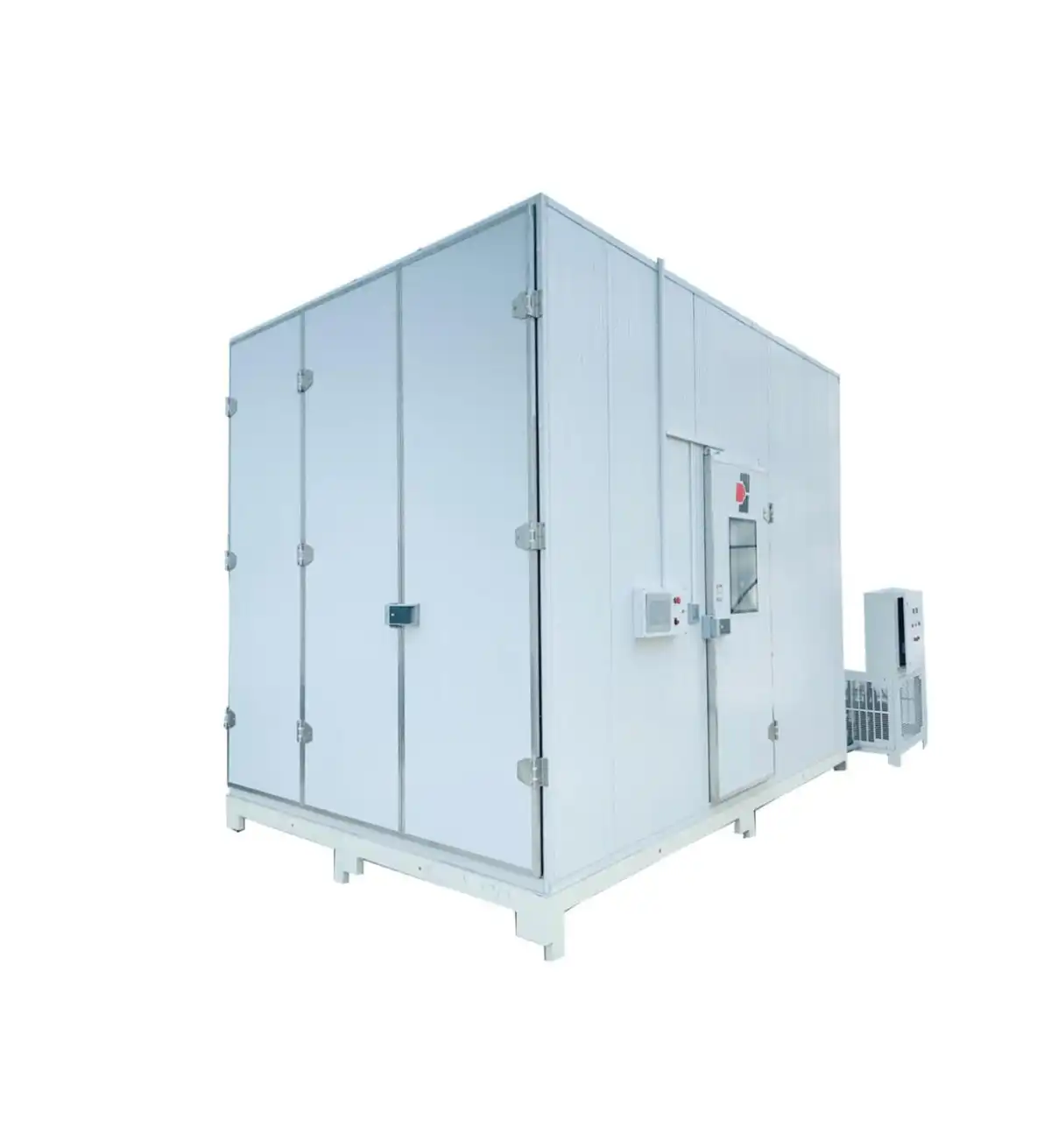
Treat the room as a controlled thermal envelope.
The walk-in cold chamber provides a large insulated environment for low-temperature storage or testing where product size, quantity or access requirements exceed cabinet chambers.
Published ITWCC models cover minimum temperatures from -10°C to -70°C, with programmable control, modular insulated construction, circulation, refrigeration and internal emergency release provisions.
Define
Test object, profile and acceptance criteria
Condition
Create the required controlled environment
Measure
Record the product and chamber response
Review
Compare results with the approved plan
Treat the room as a controlled thermal envelope.
Panel joints, door hardware, vapour sealing, circulation and refrigeration capacity work together to maintain low-temperature conditions across a large occupied test space.
Performance is built as a complete system.
Review the published performance, construction, control and safety information without losing the technical detail.
Performance
Temperature deviation ±1°C
Resolution 0.1°C
Gradient ±1°C to 2°C
Raise/fall rate 1°C to 10°C
Published noise level below 70 dB
Construction
Vapour-tight SS304 interior context
CRCA/GI/stainless exterior options
80 mm prefabricated PUF panels for modular models
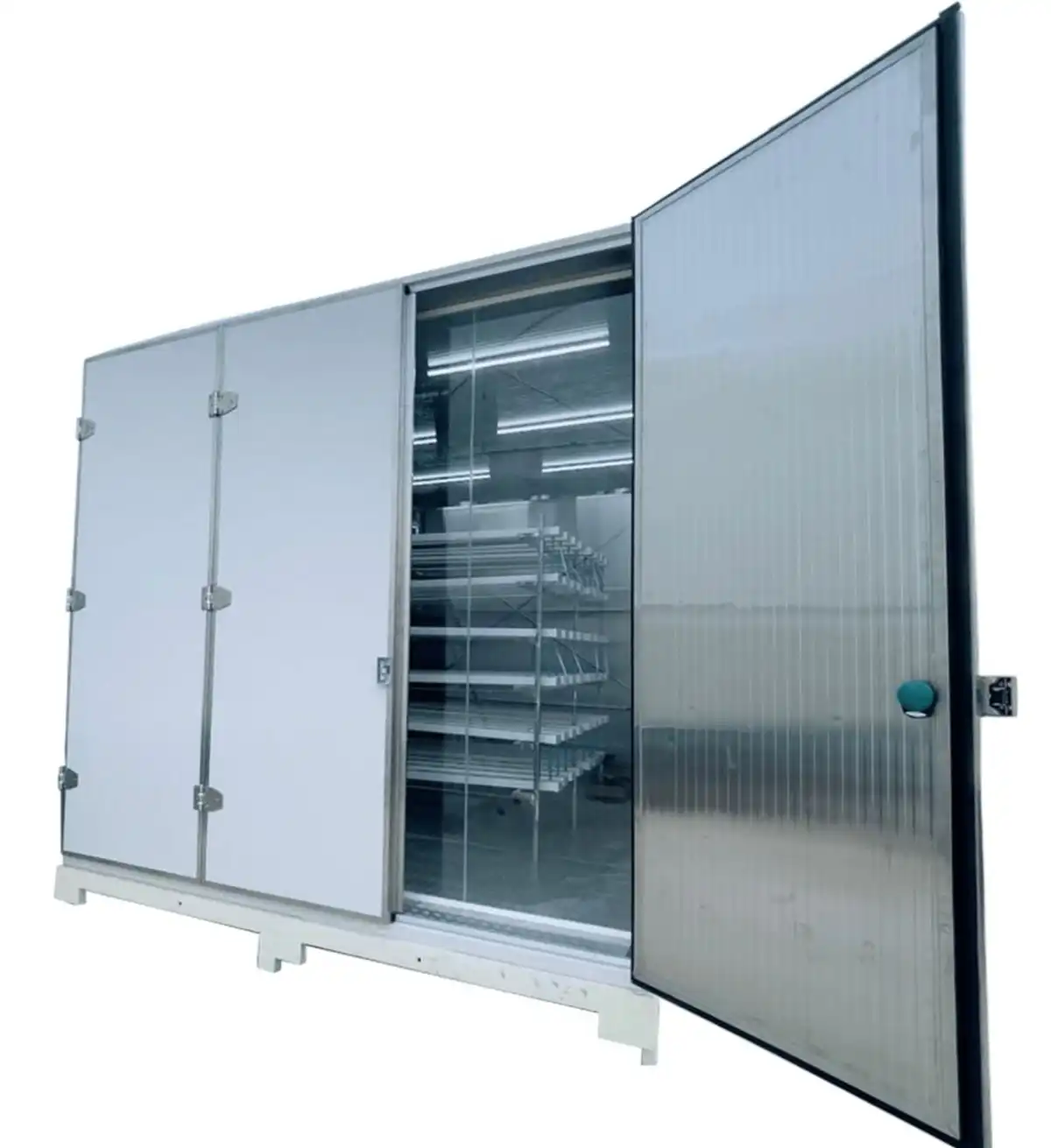
Flush-mounted door and viewing window
Positive-cam hardware and inside release
Control
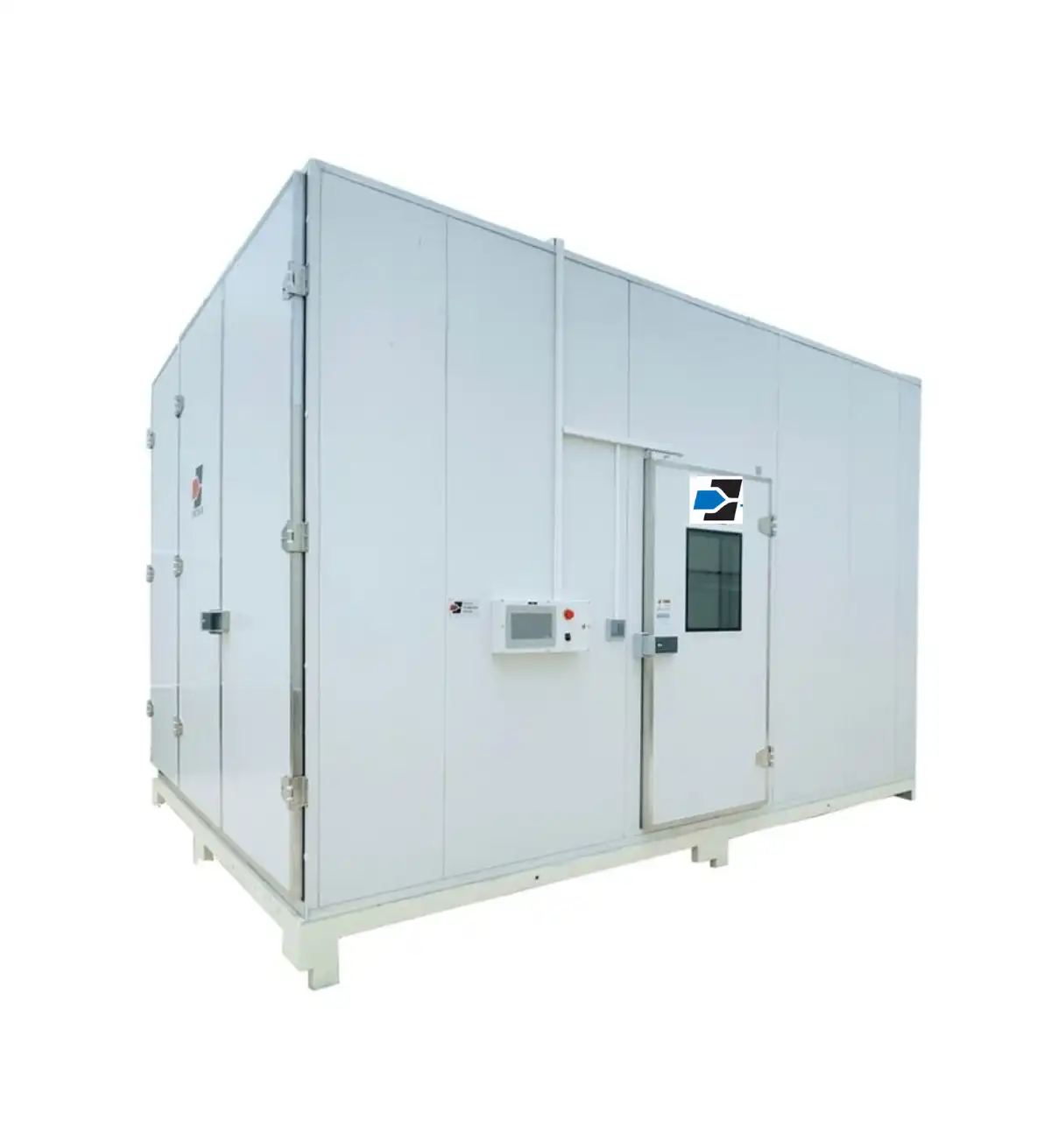
Large-screen programmable controller
Ramp/soak profiles and trend graphs
RS-232/485, networking and USB context
Power-failure recovery
PT100 temperature sensor
Safety
Emergency stop
Internal door release
Door-limit switch
HP/LP refrigeration cut-outs
Over-current and thermal-fuse protection
Configured around the test—not around a catalogue box.
Large walk-in working volume
Modular PUF panel construction
Positive-cam door hardware
Internal safety-release device
Programmable temperature profiles
Air- or water-cooled refrigeration
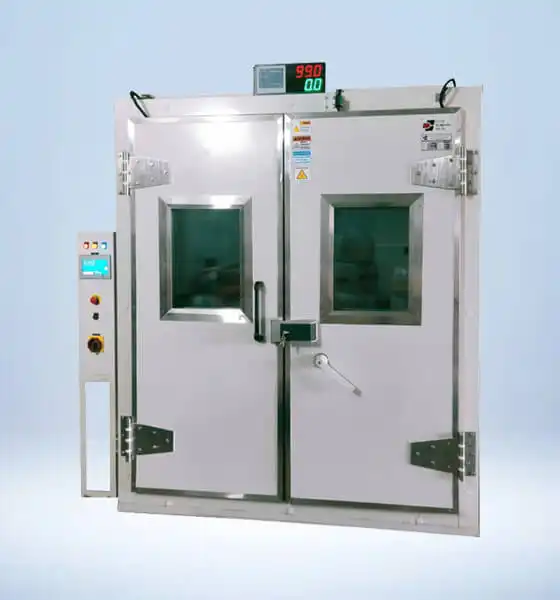
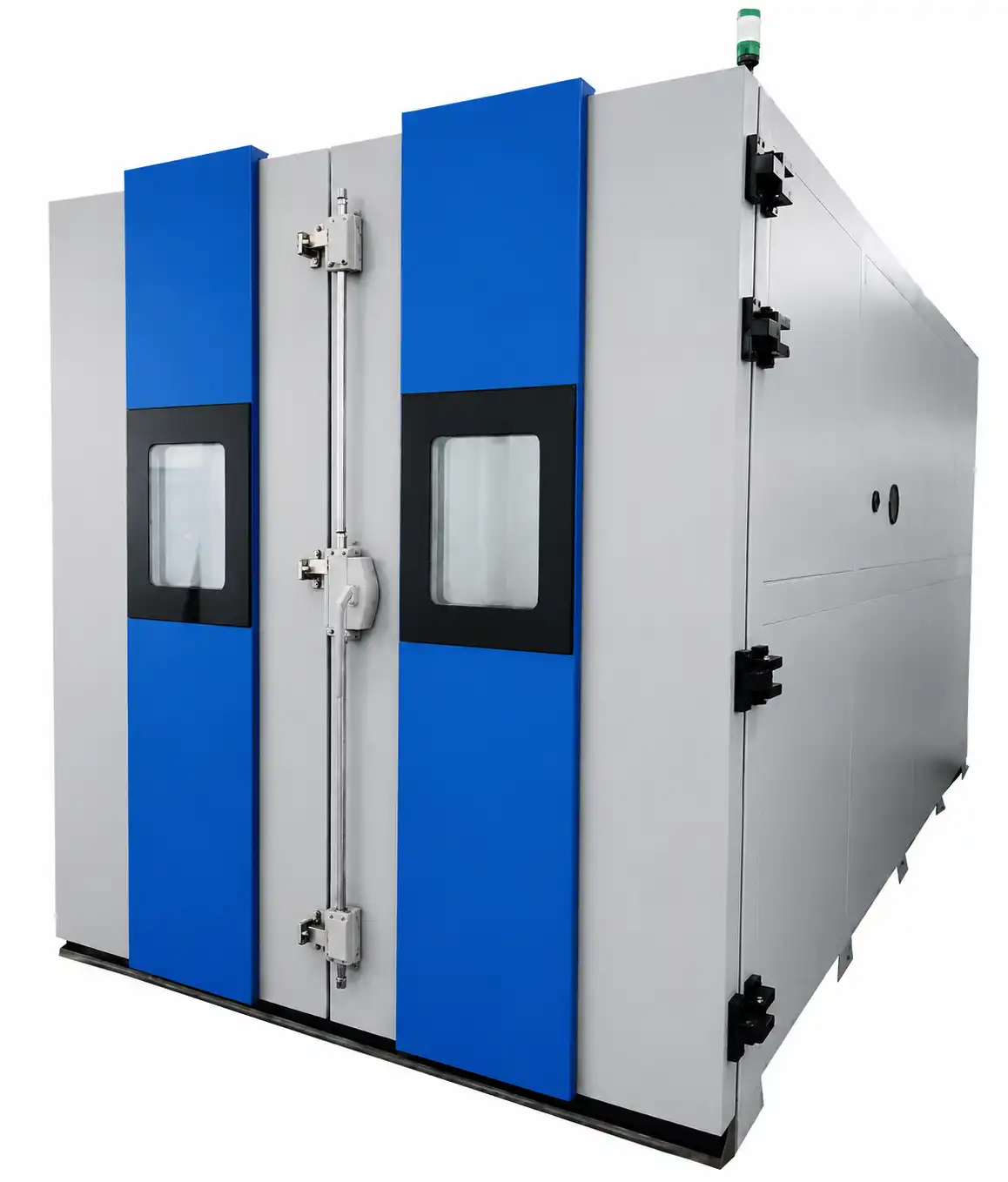
Walk-in cold chamber models.
Published values are reorganised for clarity. Final performance is subject to the approved chamber configuration, working load and test method.
Where this system works.
- 01Large component cold testing
- 02Temperature-sensitive storage
- 03Electronics and assemblies
- 04Food and beverage products
- 05Pharmaceutical materials
- 06Cold-weather simulation
Standards and test methods
Only standards explicitly associated with the current ISOTECH product material are shown. Confirm the edition, clauses, specimen arrangement and acceptance criteria before ordering.
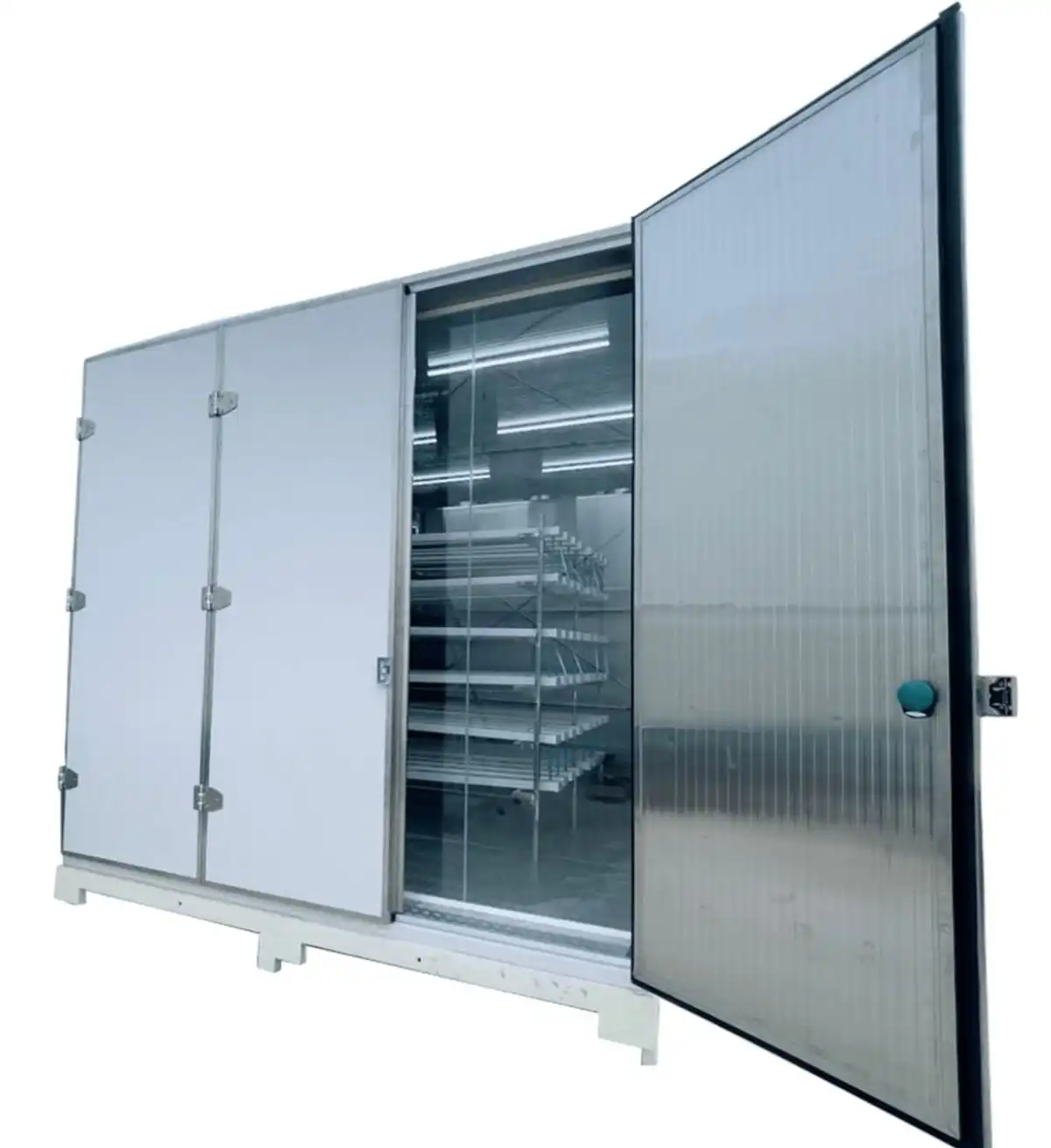
Equipment views and configurations.
Continue the qualification programme.
Turn your test requirement into a buildable chamber specification.
Share the DUT dimensions, load, operating state, environmental profile, duration, instrumentation, utilities, safety requirements and applicable standard.
Walk-In Cold FAQs.
Answers based on the current ISOTECH product page, reorganised for engineering clarity. Confirm project-specific values in the final proposal.
A large insulated room used to store or test products under controlled low-temperature conditions.
ITWCC models are published with minimum temperatures of -10°C, -20°C, -40°C or -70°C and a common upper point of +20°C.
The current model table publishes 3,000 to 150,000 litres.
The current construction description includes a safety-release exit device for opening modular walk-in models from either side.
The published page describes air- or water-cooled single-stage or cascade systems depending on the selected temperature range.
No. The current page describes both low-temperature storage and environmental product-testing applications.
Define the test object dimensions, mass, heat load, operating state, required profile, instrumentation, access, utilities and acceptance criteria before selecting the Walk-In Cold.
Yes. Working volume, ports, shelves or fixtures, controller, monitoring, safety and installation provisions can be engineered around the approved requirement.
The current ISOTECH material describes installation, commissioning, operator training, calibration and maintenance support. Confirm the required scope in the quotation.
Warranty duration and coverage should be confirmed in the commercial proposal for the selected configuration and installation location.