
Stability Chambers.
Controlled temperature and humidity environments for repeatable stability studies, conditioning programmes and regulated laboratory workflows.
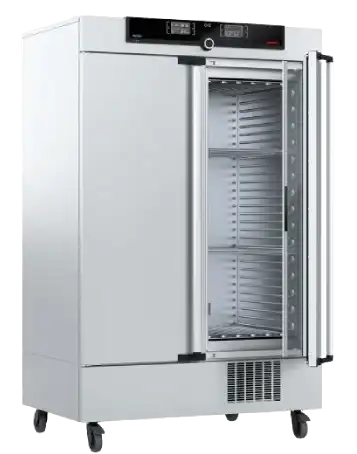
Control the condition. Preserve the evidence.
ISOTECH Stability Chambers are intended for tests in which the sample environment must remain within defined temperature and humidity limits. The systems are developed around safety, reliability, operating simplicity and ergonomic access.
Published configurations cover compact reach-in chambers and large dismantling walk-in systems for pharmaceutical and other controlled-conditioning applications.
Test-space capacity
Configurations published from laboratory reach-in to dismantling walk-in volumes.
Temperature deviation
Published reference performance for controlled stability conditions.
Temperature resolution
Controller indication resolution stated by the current product material.
Humidity deviation
Model and operating-condition dependent published range.
Temperature gradient
Published chamber spatial-gradient reference.
Average raise / fall
Declared temperature transition reference across the family.
A continuous record of the environment around the sample.
Programme, monitor and review temperature-humidity profiles with trend visualization, history and recovery features suited to extended conditioning work.
Multiple programmes and profile segments support cyclic operation.
Published high-speed ports with networking and USB communication.
Recovery operation helps restore the programmed workflow after interruption.
Define
Set the required temperature, humidity and profile segments.
Condition
Distribute controlled air uniformly around the test space.
Monitor
Observe live values, programme patterns and trend history.
Review
Use the applicable records and study protocol for evaluation.
Published performance, arranged for fast technical review.
The family balances environmental range, chamber uniformity, configurable control and large capacity options.
Reach-in to walk-in scale
Test-space dimensions are published from 100 litres through 25,000 litres.
Two low-limit families
Model variants cover −20°C to +70°C or −10°C to +70°C.
Broad RH conditioning
Published operating range from 30% RH to 97% RH.
Conditioned-air circulation
Fan and impeller distribute temperature and humidity throughout the workspace.
Programmable or direct control
LO models support logic-programmable operation; RE models use non-programmable control.
Cable ports and shelving
Side cable ports, removable shelving, drainage and additional shelves support the test setup.
 304-grade
interior / insulated envelope
304-grade
interior / insulated envelopeA sealed, insulated workspace engineered for controlled conditioning.
The published construction system combines a corrosion-resistant interior, protected exterior, thermal insulation, observation window and serviceable conditioned-air plenum.
Interior workspace
Non-frost, vapour- and air-tight structure in 16 or 18 SWG, 304-grade stainless steel with adjustable and removable shelving.
External structure
16 or 18 SWG CRCA, GI or stainless steel with electrostatic superfine powder-coated finish.
Thermal envelope
Asbestos-free, CFC-free mineral-fibre insulation and CFC-free foamed-in-place PUF. Dismantling ITSTW models use published 80 mm PUF panel insulation.
Reach-in door
Right-hand hinged, front-opening single door with double-lined A-grade silicone gaskets, multi-pane viewing glass, automatic-cut-off defogger heaters and internal illumination.
Walk-in access
ITSTW models use a flush-mounted door, viewing window, positive cam-lift hardware and a safety-release exit device operable from both sides.
Four coordinated systems maintain the chamber environment.
Select each technical layer to review the published operating method.
Uniform conditioned-air circulation
A suitable-capacity fan motor and impeller distribute temperature and humidity within defined limits. Only the impeller is exposed in the conditioning plenum; the drive motor remains outside the chamber. A detachable plenum cover supports maintenance access.
Designed for uniform circulation around specimens.
Reference sound-level statement from the current material.
Quick-response jacket air heating
Jacket-type air heaters raise the chamber to its programmed temperature. Heater placement is intended to avoid direct heat radiation onto the test specimen, while uniform distribution helps reduce variation across multiple specimens.
Quick response toward the selected setpoint.
Heaters are positioned away from direct line-of-sight exposure.
Humidification and dehumidification
A direct-vaporization, low-pressure steam system stimulates the required humidity. A reservoir and automatic float switch maintain the humidity-tank water level. Refrigeration-based dehumidification helps control lower RH and reduce condensation on specimens.
Automatic reservoir-level control supports continuous supply.
Supports lower-RH control and condensation management.
Single-stage mechanical refrigeration
Published configurations use water- or air-cooled, non-CFC refrigeration with ozone-friendly refrigerant and hermetically sealed or low-power boosted semi-sealed compressor options. The circuit includes electronic expansion, condenser, plate-fin cooler and pressure protection.
Final refrigerant and compliance should be confirmed for the supplied model.
Suction and discharge pressure measurement plus oil-return provisions.
Programme the profile. See the history. Protect the study.
Programmable models use a large-screen controller with touch and key input, graphical programme patterns, historical trends, ramp-and-soak segments and communication facilities. RE models use microprocessor PID non-programmable temperature and humidity control.
TFT LCD interface
Large display with touch-screen and key operation, graphical programme patterns and test-history trend graphs.
Programme architecture
Multiple programmes and profile segments with ramp-and-soak duration for cyclic operation.
Communication and recovery
RS 232/485, networking and USB communication for transfer, plus power-failure recovery operation.
Measurement
PT100 temperature sensor and high-precision RH sensor. The published continuously wetted humidity-sensor method supports self-cleaning and extended sensor life.
Choose range, volume and control architecture.
The current ISOTECH material publishes eight reach-in and walk-in variants. Exact working volume, performance at the requested condition and utility loading are finalized in the technical quotation.
| Model no. | Temperature range | Humidity range | Test-space volume | Format |
|---|---|---|---|---|
| ITSTC-20 RE | −20°C to +70°C | 30% to 97% RH | 100–3,000 L | Reach-in / RE |
| ITSTC-10 RE | −10°C to +70°C | 30% to 97% RH | 100–3,000 L | Reach-in / RE |
| ITSTW-20 RE | −20°C to +70°C | 30% to 97% RH | 3,000–25,000 L | Walk-in / RE |
| ITSTW-10 RE | −10°C to +70°C | 30% to 97% RH | 3,000–25,000 L | Walk-in / RE |
| ITSTC-20 LO | −20°C to +70°C | 30% to 97% RH | 100–3,000 L | Reach-in / LO |
| ITSTC-10 LO | −10°C to +70°C | 30% to 97% RH | 100–3,000 L | Reach-in / LO |
| ITSTW-20 LO | −20°C to +70°C | 30% to 97% RH | 3,000–25,000 L | Walk-in / LO |
| ITSTW-10 LO | −10°C to +70°C | 30% to 97% RH | 3,000–25,000 L | Walk-in / LO |
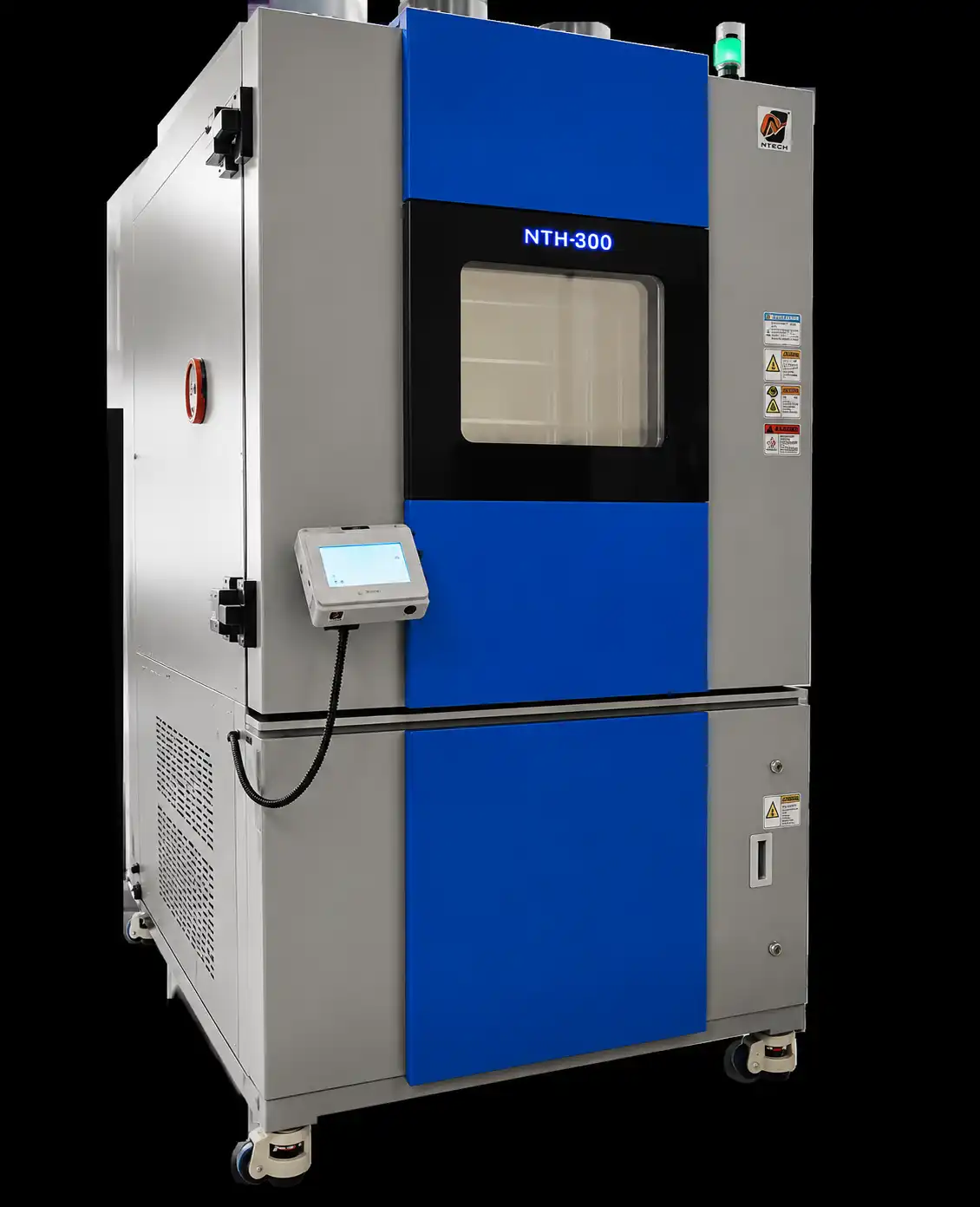
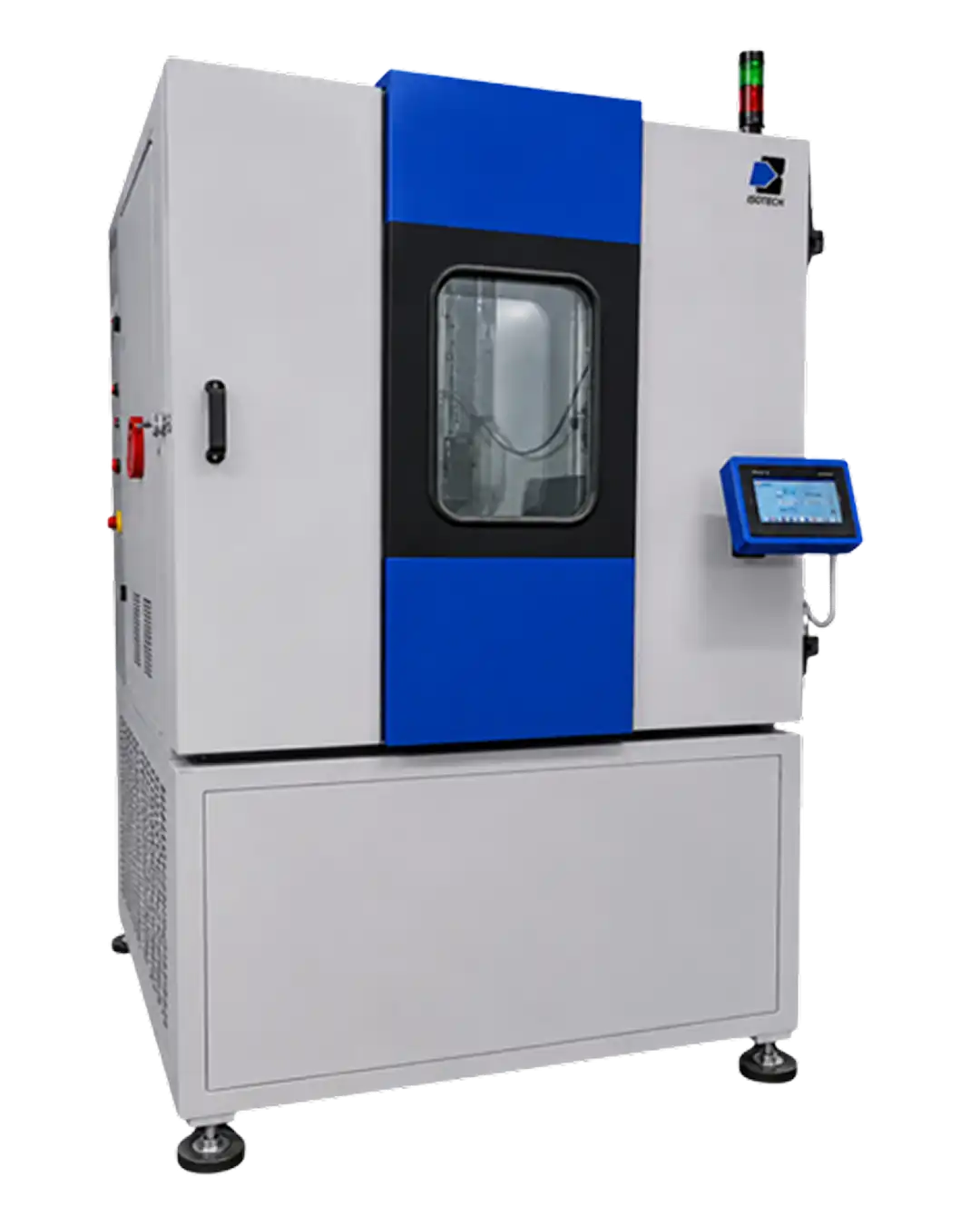
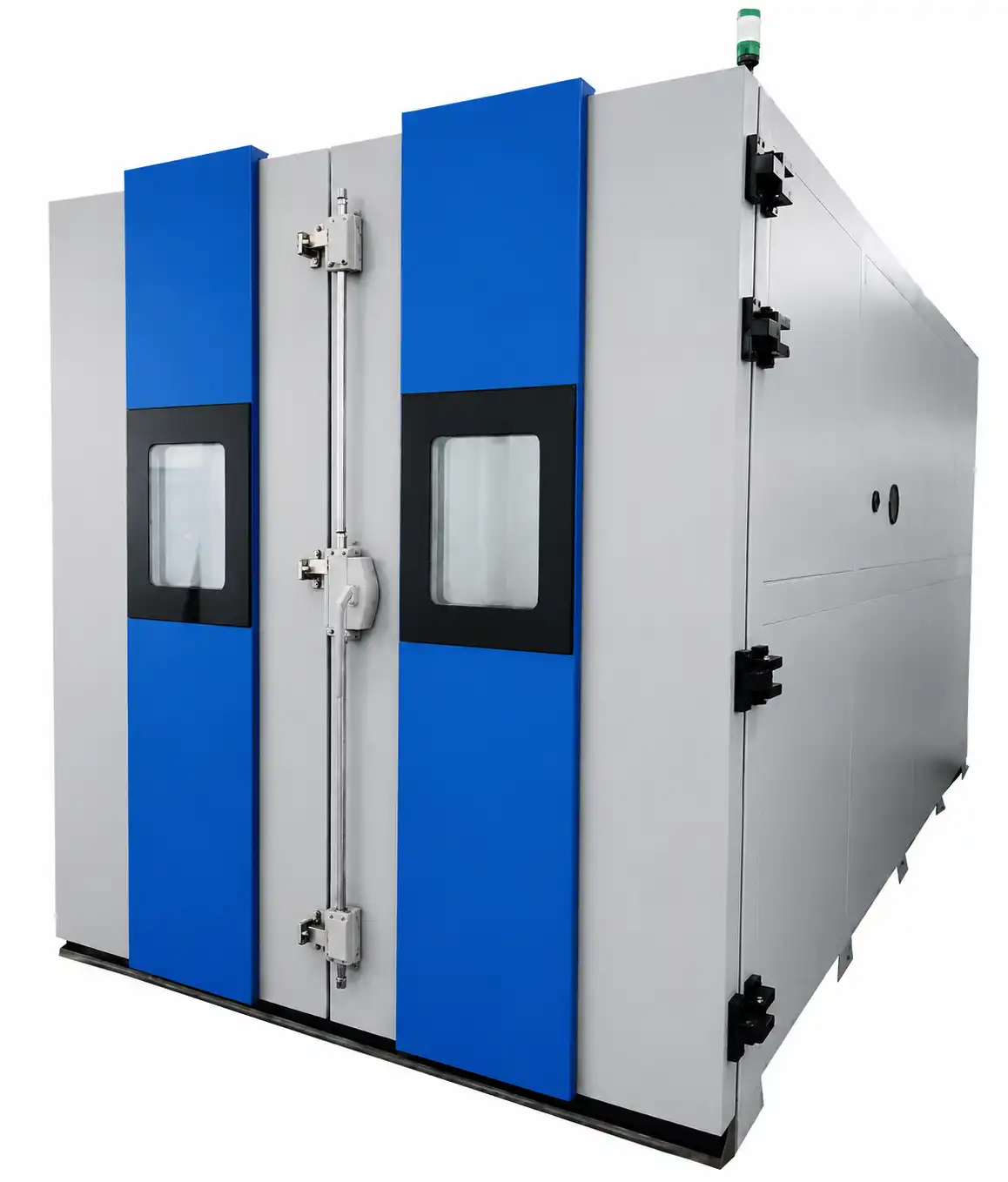
Stability Chamber configurations.
Published cabinet and chamber views from the current ISOTECH product material.
Specify the condition, duration, volume and record requirements.
Share the study protocol, sample load, chamber size, temperature-RH range, controller preference and installation utilities for an application-led proposal.
Stability Chamber FAQs.
Practical answers based on ISOTECH’s published chamber family. Final configuration and compliance scope should be confirmed against the selected model and protocol.
A stability chamber maintains defined temperature and humidity conditions around samples for controlled conditioning and stability evaluation over the required study period.
They create controlled storage conditions so teams can study how product quality changes with environmental exposure. The exact condition, duration, monitoring and acceptance criteria come from the applicable study protocol.
The published family covers 100 to 3,000 litres for ITSTC reach-in models and 3,000 to 25,000 litres for ITSTW walk-in models.
Model families are published with −20°C to +70°C or −10°C to +70°C temperature ranges and 30% to 97% RH. Achievable combinations and performance depend on model, load and operating point.
LO denotes logic-programmable models with programme and profile control. RE denotes non-programmable models using microprocessor PID temperature and humidity control.
The published programmable instrumentation includes trend history plus RS 232/485, networking and USB communication. Confirm the exact data-integrity, audit-trail, access-control and export functions required for your validation plan.
Published devices include an emergency stop, overcurrent protection, thermal fuse, adjustable high/low temperature cut-out, door limit switch and circuit-specific protective shutdown.
ISOTECH publishes multiple capacities, range options, cabinet formats and controller architectures. Additional shelves, ports and application-specific requirements can be discussed during technical selection.
The current material lists 415 or 220 V AC ±10%, three- or single-phase, neutral/protective earth and 50 Hz. Drainage, cooling method, water quality and actual connected load must be confirmed for the selected chamber.
Share the applicable protocol, temperature-RH conditions, duration, sample quantity and heat load, working volume, access needs, controller and recording requirements, utilities and installation location.